

 United StatesJFK
 MexicoMEX
 BrazilGRU
 ArgentinaEZE
 ChileSCL
 ColombiaBOG
 PeruLIM
 PanamaPTY
 Costa RicaSJO
 Dominican RepublicPUJ
 JamaicaMBJ
 BahamasNAS
 BarbadosBGI
 United KingdomLHR
 IrelandDUB
 FranceCDG
 GermanyFRA
 NetherlandsAMS
 BelgiumBRU
 SwitzerlandZRH
 AustriaVIE
 ItalyFCO
 SpainMAD
 PortugalLIS
 GreeceATH
 TurkeyIST
 DenmarkCPH
 SwedenARN
 NorwayOSL
 FinlandHEL
 PolandWAW
 Czech RepublicPRG
 HungaryBUD
 IcelandKEF
 United Arab EmiratesDXB
 QatarDOH
 Saudi ArabiaRUH
 IsraelTLV
 EgyptCAI
 MoroccoCMN
 South AfricaJNB
 KenyaNBO
 NigeriaLOS
 IndiaDEL
 PakistanLHE
 Sri LankaCMB
 SingaporeSIN
 MalaysiaKUL
 ThailandBKK
 VietnamSGN
 PhilippinesMNL
 IndonesiaCGK
 Hong KongHKG
 ChinaPVG
 TaiwanTPE
 JapanHND
 South KoreaICN
 AustraliaSYD
 New ZealandAKL
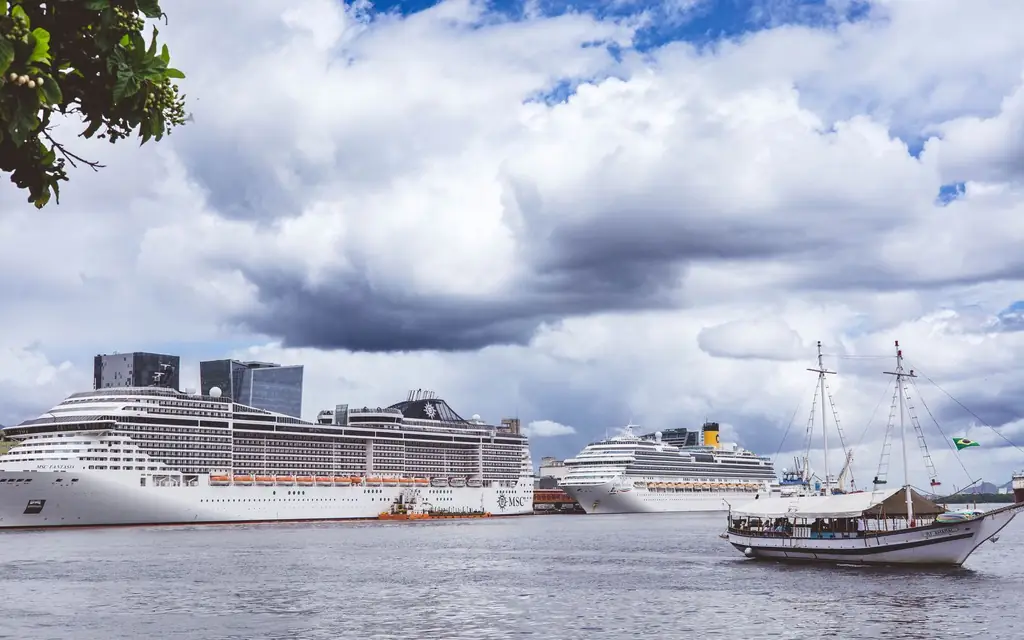
A cruise is the one kind of trip where being late is not an inconvenience but a missed holiday. The ship sails at a published time, the terminal has a boarding window, and the airport where your flight lands can be an hour away from the berth. A cruise port transfer is the part of the journey where the margin for error is smallest, and where a booked, tracked vehicle makes the biggest difference.
This hub explains how Enroutz.ca handles cruise terminal transfers worldwide, lists the ports we cover with the distances that matter, and sets out the timing rules that apply wherever you sail. Each port has its own page with local detail; this page is the map.
How does a cruise port transfer with Enroutz.ca work?
You enter your pickup (an airport, a train station or a hotel), the port and the sailing date in the booker. The Enroutz.ca desk confirms a fixed fare, tracks your flight and puts a licensed chauffeur at the right terminal door inside your boarding window.
In Toronto, the ride is operated from our Toronto desk with the Enroutz.ca fleet and chauffeurs. Everywhere else, whether that is elsewhere in Canada, the United States, Europe or the Middle East, the ride is delivered by a vetted, licensed and commercially insured local chauffeur partner and is booked, confirmed and invoiced by the Enroutz.ca desk. That means one booking, one confirmation, one invoice and one point of contact around the clock, even if your cruise starts in one country and ends in another. Partner vehicles are no more than four model years old; Rolls-Royce, Bentley and Maybach vehicles up to seven.
Trips inside the United States are delivered by US-licensed partners, because Canadian-plated vehicles cannot do domestic point-to-point work there. If you are crossing the border by road from Toronto, that trip runs from Toronto.
The ports we cover
Choose your port for terminal detail, distances and local notes.

- Toronto: the Cruise Ship Terminal on Unwin Avenue in the Port Lands, about 30 km from Pearson. Our own fleet and chauffeurs.
- Montréal: the St. Lawrence gateway, about 20 km from Trudeau Airport, with Québec City about 250 km downriver.
- Québec City: wharves beside Old Québec, with an important access rule at Wharf 30.
- Halifax: the Nova Scotia waterfront, with Halifax Stanfield about 35 km away.
- Vancouver: the Alaska gateway at Canada Place, with YVR about 15 km away.
- Miami: PortMiami, with Miami International about 15 km away.
- Port Everglades: Fort Lauderdale, with FLL about 5 km away.
- Port Canaveral: the port for Orlando, with MCO about 70 km away.
- New York: Manhattan, Brooklyn and New Jersey terminals, depending on your ship.
- Southampton: the south-coast cruise port, with Heathrow about 110 km away.
- Barcelona: the Mediterranean hub, with the airport about 15 km away.
- Civitavecchia (Rome): the port for Rome, with Fiumicino about 65 km away and Rome about 80 km.
- Dubai: the cruise terminal in the Gulf.
Distances are approximate; the booker shows the exact distance and fare for your address. If your port is not listed, enter it anyway. The desk confirms a quote for any pickup worldwide.
Which airport is closest to which port?
The following table gives the usual airport pairings and approximate distances. Check your cruise line's documents for the actual berth.

| Port | Usual airport | Distance (about) | Typical drive time |
|---|---|---|---|
| Toronto | Toronto Pearson (YYZ) | 30 km (19 miles) | 30 to 55 minutes |
| Montréal | Montréal-Trudeau (YUL) | 20 km (12 miles) | 20 to 45 minutes |
| Québec City | Jean-Lesage (YQB) | 16 to 20 km (10 to 12 miles) | about 20 to 30 minutes |
| Halifax | Halifax Stanfield (YHZ) | 35 km (22 miles) | 30 to 45 minutes |
| Vancouver | Vancouver (YVR) | 15 km (9 miles) | 20 to 40 minutes |
| Miami | Miami International (MIA) | 15 km (9 miles) | 20 to 40 minutes |
| Port Everglades | Fort Lauderdale (FLL) | 5 km (3 miles) | 10 to 20 minutes |
| Port Canaveral | Orlando (MCO) | 70 km (43 miles) | 50 to 75 minutes |
| Southampton | London Heathrow (LHR) | 110 km (68 miles) | 1 hour 15 to 1 hour 45 |
| Barcelona | Barcelona El Prat (BCN) | 15 km (9 miles) | 20 to 40 minutes |
| Civitavecchia | Rome Fiumicino (FCO) | 65 km (40 miles) | 50 to 80 minutes |
Embarkation day: working backwards from the ship
The best planning rule is to start with the cruise line's boarding window and work backwards. The window is set by the cruise line, not by us and not by the port, so your boarding documents are the final word. Ports give general guidance too: the Port of Québec, for example, advises cruise passengers to reach the wharf at least two hours before the ship departs.

Working backwards means: the time you must be at the terminal, minus the drive time, minus a margin for traffic, minus the waiting time at the airport. For a flight arrival, that last item includes immigration, baggage and the walk to the pickup point. Our free waiting allowance is 60 minutes after landing on international arrivals, 30 minutes on domestic arrivals and 15 minutes on other pickups, and flight tracking is included on every airport pickup, so a delayed aircraft moves the pickup automatically.
Our suggestion for the day of sailing is to avoid tight connections. If your flight is the same day as your sailing, choose an early arrival. If you can fly in the day before, a hotel night absorbs a delayed flight, because a ship sails to its schedule. Travel insurance and the cruise line's own flight programmes are worth reading about; they are outside our service.
Disembarkation day
At the end of a cruise, hundreds or thousands of passengers want transport at the same hour. A booked chauffeur is already waiting at the pickup point you chose. Tell us your ship, the disembarkation date, the expected time and your onward destination, which is usually an airport, a station or a hotel.
Two details prevent most disembarkation problems. First, give us the ship's name as well as the port; many ports have more than one terminal and the ship determines which one. Second, plan your onward flight with a margin. Cruise lines publish an expected time for leaving the ship, not a guaranteed time, and customs processing can take longer in some ports.
Terminals move: why we check the berth
Ships do not always use the same berth. Two of the Canadian ports show how much the detail matters. At Toronto, the Toronto Port Authority says passengers embark and disembark at the building's North Door at 8 Unwin Avenue. At Québec City, the Port of Québec lists two cruise terminals and says that at Wharf 30, only authorised vehicles can enter during the cruise season and a shuttle is available. In both cases a driver who simply types "cruise port" into a navigation system could end up at the wrong door.
For each booking, the desk asks for the ship name and date, checks the terminal and the pickup point against the port's published information, and puts the correct address on the chauffeur's job sheet. Where a port does not publish the information we need, we say so on the port's page rather than guess.
Luggage and vehicle choice
Cruise luggage is bigger than airline luggage. A couple often arrives with two large cases each plus cabin bags. Vehicle capacity decides how many cars you need.
- Executive Sedan (Mercedes-Benz E-Class, Cadillac CT6 or Lyriq or similar): up to three passengers, two large and two cabin bags.
- First Class Sedan (Mercedes-Benz S-Class, BMW 7 Series or similar): up to three passengers, two large and two cabin bags.
- Luxury SUV (Cadillac Escalade, Chevrolet Suburban, GMC Yukon Denali or similar): up to six passengers, five to six large bags.
- Executive Sprinter (Mercedes-Benz Sprinter): up to twelve passengers, twelve bags.
- Mini-coach and coach (20 to 56 seats): on request, for groups and family reunions.
Maybach, Rolls-Royce and stretch limousine are on request, with availability confirmed at booking. The exact model is confirmed at booking. Child, toddler and booster seats are available on request. Most vehicles carry Wi-Fi, water and phone chargers. See the fleet page and group transportation for bigger parties.
Keep passports, boarding documents and medication in your carry-on. The Port of Québec gives the same advice, because bags that have been handed over are not available to you until later.
Entry rules vary by country and by how you arrive
Every country sets its own entry rules, and they can depend on whether you arrive by air or by sea. As an example, Immigration, Refugees and Citizenship Canada's eTA eligibility page says an eTA is needed only for air travel, that most arrivals by land or sea, cruise ships included, do not need one, and that U.S. citizens are exempt but must carry proper identification. If you fly into Canada to join a ship, however, your arrival is by air.
We cannot advise on visas or entry for any country, and we do not state rules we have not checked against the government's own site. Check your cruise line's documents and the official site for each country on your route before you travel.
Comparing the ways to reach a cruise terminal
| Option | Time | Cost note | Who it suits |
|---|---|---|---|
| Pre-booked chauffeur (Enroutz.ca) | Door to door | Fixed fare via booker | Families, luggage, fixed windows, privacy |
| Cruise-line shuttle | Scheduled | Set by the cruise line | Travellers on a cruise-line package with a good flight match |
| Taxi | Door to door | Metered | Light luggage, flexible timing |
| Rideshare | Door to door | Surge-priced at peaks | Solo travellers who can find the terminal gate |
| Train or public transit | Varies | Lowest | Light packers with time, near a station |
| Rental car | Door to door | Rental plus fuel, parking and drop-off fees | Road-trippers; poor for same-day sailing |
PortMiami's own website says most cruise lines offer a shuttle service from Miami International Airport to the port, which is a good example: if your package includes it and your flight matches the shuttle, it is a sound choice. A chauffeur wins when your flight does not match, when you have a family and several cases, or when you want the vehicle waiting rather than queueing. The chauffeur versus rideshare guide compares the rest honestly.
Before and after the cruise
Many sailings begin or end in a city worth a night or two. The same desk can book your airport arrival, your hotel transfer and a day out. The hotels hub lists the properties we know best; the hourly chauffeur service covers a half day while your luggage stays in the vehicle; and the private tours with driver page covers longer outings. If your trip also includes a private aircraft, the private aviation hub lists the FBOs we serve.
Cruise trips often include rail legs and city stays. See the train stations hub and the airports hub for the other pickups on a multi-stop itinerary, and the Canada, USA and Europe hubs for city-by-city coverage.
Booking and cancellation
Use the booker, enter any pickup worldwide and the port as your destination, add the sailing date, and the desk confirms a fixed quote. Cancellation terms: more than 72 hours' notice, no charge; 72 hours or less, 10%; 48 hours or less, 50%; 24 hours or less or a no-show, 100%, measured from the scheduled pickup time. Large events and conventions may carry a different deadline, which is stated on the confirmation.
Chauffeurs do not photograph clients or post about trips, and NDAs are signed on request. We never promise alcohol on board; local law applies. The worldwide chauffeur network page explains how partner standards work, and the why Enroutz.ca page explains the model.
Frequently asked questions
What is a cruise port transfer?
It is a pre-booked ride between an airport, station or hotel and a cruise terminal, timed to your boarding or disembarkation. With Enroutz.ca the fare is fixed and shown before you pay.
How early should I arrive at the cruise terminal?
Follow your cruise line's boarding window. As a guide, the Port of Québec advises reaching the wharf at least two hours before the ship departs. Tell us your window and we time the chauffeur to arrive inside it.
Will the chauffeur wait if my flight is delayed?
Yes. The desk tracks the flight and moves the pickup. Free waiting is 60 minutes after landing on international arrivals, 30 minutes domestic and 15 minutes on other pickups, as stated on your confirmation.
Do you cover ports outside Canada?
Yes. In the USA, Europe and the Middle East, a vetted, licensed and commercially insured local partner delivers the ride, and the Enroutz.ca desk books, confirms and invoices it. See the port pages above for the ones we have written up.
How much luggage fits in a Luxury SUV?
A Luxury SUV takes up to six passengers and five to six large bags. For more luggage, we use an Executive Sprinter or a second vehicle. Tell us the numbers when you book.
Do I need a visa or eTA for my cruise?
That depends on your nationality, your route and how you enter each country. We cannot advise on entry rules. As one example, IRCC says an eTA is needed only for air travel to Canada, but check the official site for each country on your route.
Can you pick me up from a cruise terminal and take me to an airport?
Yes. Enter the terminal as the pickup and the airport as the destination, with the disembarkation date. Give us the ship's name so we confirm the right terminal.
What happens if my ship docks at a different terminal?
Tell the desk. We move the pickup to the correct terminal; the fare is re-quoted against the new address before anything is charged. Ships do change berths, and the port's schedule is the reference.
Can you provide a vehicle for a large family or group?
Yes. An Executive Sprinter carries up to twelve passengers and twelve bags, and mini-coaches and coaches (20 to 56 seats) are available on request.