 United StatesJFK
 MexicoMEX
 BrazilGRU
 ArgentinaEZE
 ChileSCL
 ColombiaBOG
 PeruLIM
 PanamaPTY
 Costa RicaSJO
 Dominican RepublicPUJ
 JamaicaMBJ
 BahamasNAS
 BarbadosBGI
 United KingdomLHR
 IrelandDUB
 FranceCDG
 GermanyFRA
 NetherlandsAMS
 BelgiumBRU
 SwitzerlandZRH
 AustriaVIE
 ItalyFCO
 SpainMAD
 PortugalLIS
 GreeceATH
 TurkeyIST
 DenmarkCPH
 SwedenARN
 NorwayOSL
 FinlandHEL
 PolandWAW
 Czech RepublicPRG
 HungaryBUD
 IcelandKEF
 United Arab EmiratesDXB
 QatarDOH
 Saudi ArabiaRUH
 IsraelTLV
 EgyptCAI
 MoroccoCMN
 South AfricaJNB
 KenyaNBO
 NigeriaLOS
 IndiaDEL
 PakistanLHE
 Sri LankaCMB
 SingaporeSIN
 MalaysiaKUL
 ThailandBKK
 VietnamSGN
 PhilippinesMNL
 IndonesiaCGK
 Hong KongHKG
 ChinaPVG
 TaiwanTPE
 JapanHND
 South KoreaICN
 AustraliaSYD
 New ZealandAKL
Film production transportation in Toronto: ground transport that runs to the call sheet
A film or television production is organised around the call sheet, a document that says who must be where and when. Everything else bends to it: catering, lighting, camera and, above all, the arrival of the people in front of the lens. If a lead actor is thirty minutes late to makeup, the day starts behind and the delay compounds. Ground transport is invisible when it works and extremely visible when it does not.
Enroutz.ca provides talent transportation and crew shuttles for productions in Toronto, the GTA and Ontario, using the Enroutz.ca fleet and chauffeurs, operated from the Toronto desk. For cast who travel in from elsewhere, or for productions that shoot abroad, rides in the rest of Canada, the USA, Europe and the Middle East are delivered by a vetted, licensed and commercially insured local chauffeur partner, and the Enroutz.ca desk books, confirms and invoices them. One desk, one confirmation, one invoice for the production office.
This page explains how film and television transport works in Toronto, what the city's permit system means for vehicles, what we can and cannot do alongside a production's own transport department, and how the service is booked. The online booker shows the exact fare for any ride before you confirm.
What is film production transportation?
Film production transportation is the movement of cast, crew and production staff between hotels, airports, studios and locations, scheduled to the call sheet. Enroutz.ca supplies talent cars, Sprinter crew shuttles and airport pickups in Toronto, with flight tracking, discretion and NDAs on request, booked through one desk.
Two kinds of transport exist on any production. The first is the production's own fleet: trucks, trailers, picture vehicles and the transport department that runs them. The second is passenger movement, which is where a chauffeur service fits. We do not replace the first; we support the second.
Toronto as a production centre
Toronto is one of North America's major screen production centres. The provincial agency Ontario Creates, in its film and television industry profile, counts 419 productions in Ontario in 2022, the latest year in that profile, and notes Pinewood Toronto Studios, a 490,000 square foot facility that Pinewood Group fully acquired in May 2023. Those studios are in the Port Lands, east of downtown.

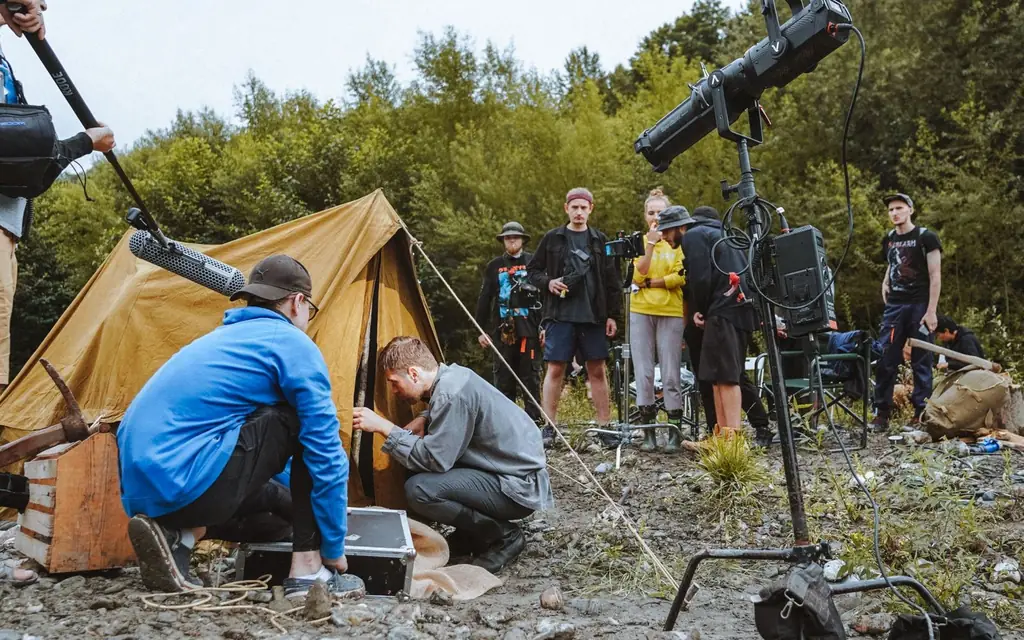
For ground transport, the scale has practical consequences. Airport arrivals for cast cluster at the start and end of a shoot. Crew shuttles run between parking areas, base camps and sets, and locations can be anywhere from a downtown street to a farm north of the city.
The call time is the schedule
Everything in film transport works backwards from the call. If an actor's call is 06:00, the pickup time is the call minus the drive, minus a margin, minus the time needed to get through the lobby. That calculation changes for each person and each day.
- Hotel to set. The most frequent ride. For downtown locations it may be a ten-minute drive. For suburban or rural locations, it may be 45 minutes or more.
- Makeup and wardrobe first. Many principals are collected earlier than the general crew, because makeup comes first.
- Wrap. The return is harder to plan, because wrap times move. Tell the desk if the schedule is likely to run late so a chauffeur is available.
- Turnaround. Overnight shoots, double days and next-day early calls are common. Plan the pickup for the next morning at the same moment as the wrap transfer.
Because a chauffeur has to stay with the vehicle and be rested, the desk needs the call sheet as early as the production has it. Revised call sheets should be sent to the desk when they are issued, not when the car is already outside.
Talent pickups and the quiet exit
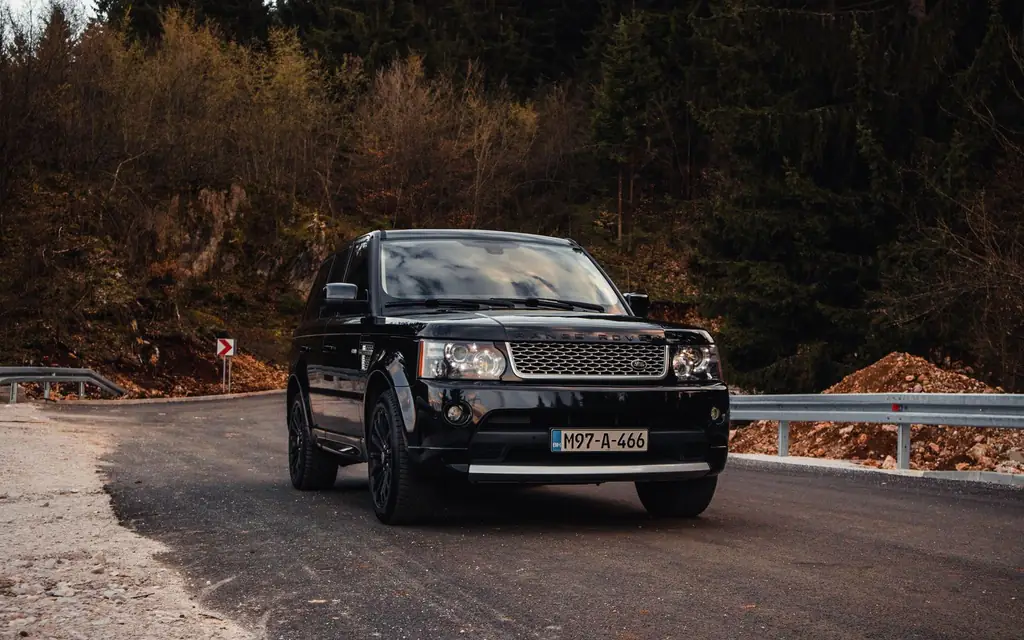
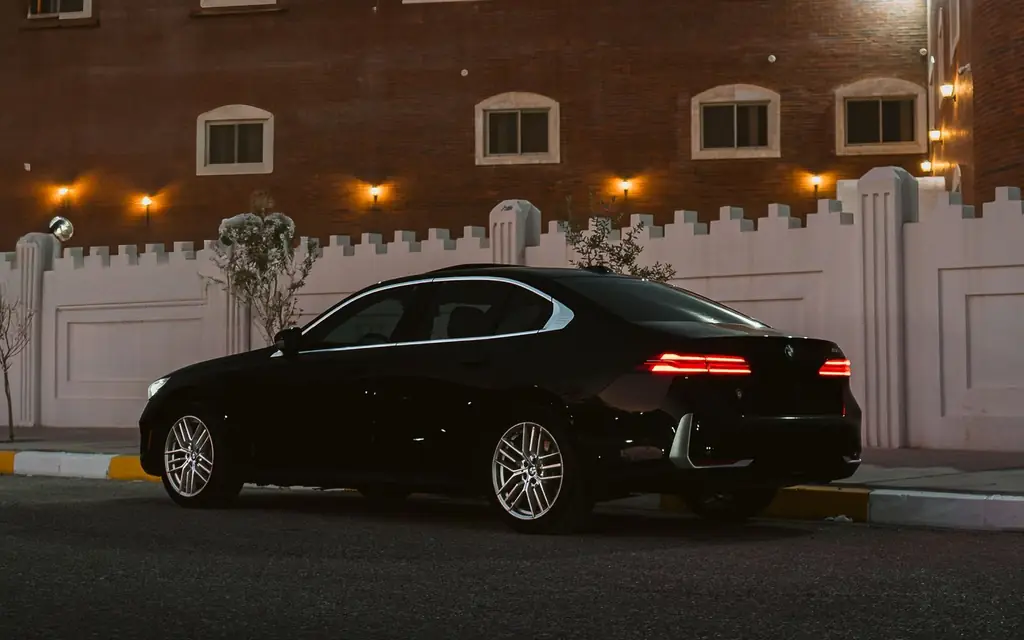
Principal cast often value an unremarkable, punctual car more than a showy one. A First Class Sedan (Mercedes-Benz S-Class, BMW 7 Series or similar) carries up to 3 passengers with 2 large and 2 cabin bags. A Luxury SUV (Cadillac Escalade, Chevrolet Suburban, GMC Yukon Denali or similar) takes up to 6 passengers and 5 to 6 large bags, which suits an actor with a team. Vehicles are "or similar", and the exact model is confirmed at booking.
Discretion matters because productions often work under embargo. Chauffeurs take no photographs of clients and post nothing about trips, and NDAs are signed on request. If an actor needs a quieter route to the set, we coordinate with the production's transport captain or unit manager. For public figures with more demanding privacy needs, the VIP chauffeur page explains the protocol in full.
Crew shuttles and unit moves
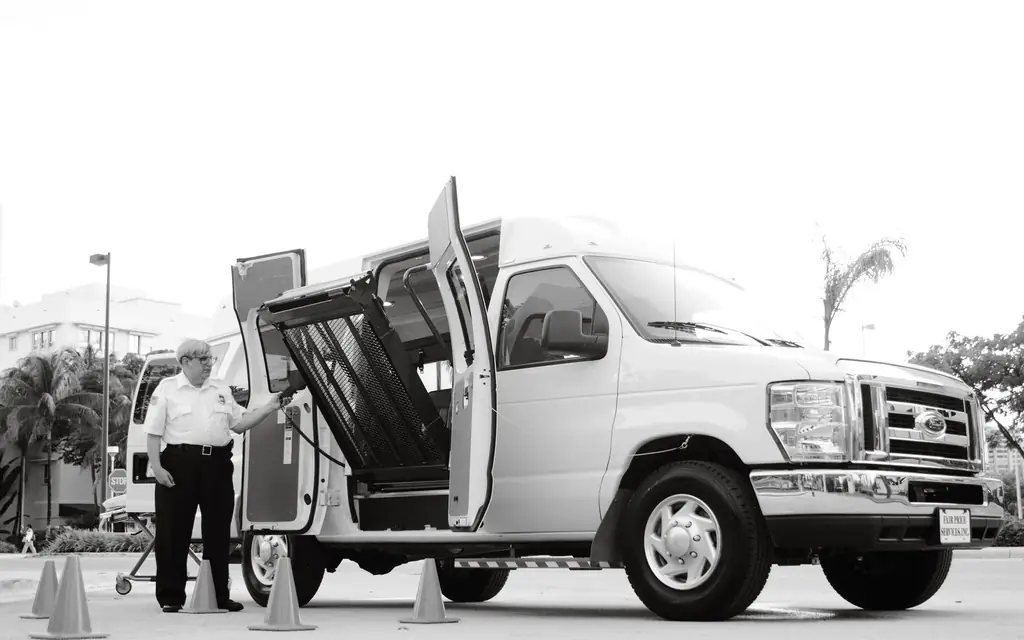
Crew move in numbers, and the vehicle should match. An Executive Sprinter (Mercedes-Benz Sprinter) carries up to 12 passengers and 12 bags. Mini-coaches and coaches (20 to 56 seats) are available on request for larger crews or for background cast. Wi-Fi, water and phone chargers are in most vehicles, though not in all of them.
Typical crew movements:
- Parking to base camp. Many locations have no parking nearby, so crew leave cars at a remote lot and ride in.
- Base camp to set. Short runs through the day.
- Unit moves. The whole unit relocates to a new location mid-day. This is the most complex movement, because everyone must leave at once and arrive in the right order.
- Hotel to studio. A daily shuttle when crew are out of town.
Unit moves need a detailed plan: pickup points, vehicle capacity, timing and who has the manifest. We need the names, the numbers and the contact on the day.
How the City of Toronto's permits affect vehicles
Permits determine where a vehicle can stop. The City of Toronto's Film, Television & Digital Media Office, known as the Film Office, coordinates film permits and approvals. According to its plan your shoot page, location permits are required for filming more than one hour on city property, or for using city streets to support filming on private property. Filming fully on private property between 7 a.m. and 11 p.m. does not need a Film Office permit, and special effects, pyrotechnics and simulated gunfire need a location permit even on private property. Park shoots need three business days of notice for small-format filming and four for large-format.
What does that mean for a chauffeur? It means the production, not the chauffeur, owns the permit and the on-street parking arrangements. When a location is on a city street, stopping places for passenger vehicles are set by the production and its traffic coordinators. We follow the production's instructions and local traffic rules, and we ask for the drop-off point in writing. Details of permit requirements change, so use the Film Office's own pages for current rules.
Airport arrivals for cast and crew
Cast and senior crew often arrive from Los Angeles, New York, London or Vancouver. Toronto Pearson is about 27 km from downtown, and the drive is usually 30 to 50 minutes. Every airport pickup is tracked, so the chauffeur works from the actual landing time. Free waiting is 60 minutes on international arrivals and 30 minutes on domestic arrivals. A name board inside arrivals is available as an add-on, with an alias if the production wants the actor's name hidden. See the meet and greet service and the Pearson airport limo page. For private aircraft, see private aviation and the Toronto FBO page.
Non-Canadian cast and crew may need to satisfy entry rules before they fly. Visa-exempt cast and crew flying in usually need an electronic travel authorization first, and the Government of Canada's eTA page is the official source. Work authorization for productions is a separate question for the production's lawyers.
Working with the production's transport department
Productions usually have a transport coordinator or captain. On many productions, the arrangements for who drives which vehicle follow the production's own agreements. We do not try to override them. The simplest way to work together is to give the coordinator the following list:
- The booking contact at the production office.
- The call sheet and all revisions.
- The transport captain's or coordinator's name and how to reach them on the day.
- A list of principals who need alias bookings.
- Any hotel and set parking constraints.
- The wrap-day plan.
We recommend that one person at the production office has authority to change bookings. Multiple people calling the desk with conflicting instructions at 05:00 is how cars end up in the wrong place.
Choosing the right vehicle on a production
| Need | Vehicle | Capacity |
|---|---|---|
| Lead actor | First Class Sedan | Up to 3 passengers, 2 large and 2 cabin bags |
| Supporting cast, executives | Executive Sedan | Up to 3 passengers, 2 large and 2 cabin bags |
| Actor with assistant and wardrobe | Luxury SUV | Up to 6 passengers, 5 to 6 large bags |
| Department crew | Executive Sprinter | Up to 12 passengers, 12 bags |
| Background cast, large unit moves | Mini-coach or coach | 20 to 56 seats on request |
| Showrunner, studio guest | Maybach or Rolls-Royce on request | Availability confirmed at booking |
Child, toddler and booster seats are available on request at booking, which is useful when a child actor or a family member travels with the cast. For group movement, see group transportation.
Toronto winters, summers and film shoots
Toronto's climate shapes production transport. Winter shoots mean snow, ice and shorter daylight, and drives take longer. Summer brings road works and festival closures downtown. If your shoot overlaps with big events, check the calendar: Toronto International Film Festival is held each September, which puts large numbers of talent and press into the same few blocks; see the TIFF page and the events hub.
Building the schedule means leaving more slack on winter mornings and on festival weeks. A 30 minute margin on a winter pre-dawn pickup is a small price for a calm start.
Comparing production transport options honestly
| Option | Strengths | Limits | Best for |
|---|---|---|---|
| Chauffeur service via Enroutz.ca | Punctual, discreet, flight tracking, fixed fare via booker | Needs call sheet in advance | Principal cast, executives, arrivals |
| Production-owned shuttles | Run to the production's own schedule | Not designed for guest travel | Crew moves |
| Rideshare | Immediate | Surge-priced at peak, driver varies, trip is recorded in an app | Staff on a night off |
| Taxi | Immediate | Metered, variable | Short unplanned trips |
| Rental cars | Independence | Parking at locations, fatigue | Crew who drive themselves |
| Transit | Lowest | Poor fit for early calls and gear | Light travellers between downtown points |
If a production's own transport department can cover a movement well, there is no reason to book us. We are most useful for principal cast, guest arrivals, executives and anything involving privacy or a tight timetable.
Productions in other cities
Productions that continue to New York, Los Angeles, London or Dubai can use the same booking process. Useful city pages are New York, Los Angeles, London and Dubai; the hubs for the USA, Europe and the Middle East list the rest. Partner vehicles run at four model years old or newer, and seven for Rolls-Royce, Bentley and Maybach. Rides within the USA are handled by US-licensed partners, as Canadian vehicles cannot carry out domestic US point-to-point work. Crossings from Toronto into the USA run from Toronto; see cross-border car service.
Booking and cancellation
A production can book through the online booker or open a corporate account with monthly invoicing, which is a good fit for a production with a single accounting office. Cancellation terms are counted from the scheduled pickup time: more than 72 hours' notice carries no charge, 72 hours or less 10%, 48 hours or less 50%, and 24 hours or less or a no-show 100%. Shoots can change quickly, so tell the desk early when a call is likely to move. Large events and conventions may have a different deadline, shown on the confirmation.
For other ways we support Toronto's productions and events, see event transportation, the services hub, the corporate chauffeur service page, and why Enroutz.ca.
Frequently asked questions
Do you provide talent transportation for film and TV productions in Toronto?
Yes. Enroutz.ca supplies chauffeured cars for cast and executives, Sprinter shuttles for crew, and airport pickups, all booked through the Toronto desk and scheduled to the call sheet.
Can you pick up cast at 4 a.m.?
Yes, with advance notice. Give the desk the call sheet as early as you have it, and revisions as they are issued, so a chauffeur is arranged for the real call time.
How do you protect an actor's privacy?
Chauffeurs take no photographs of clients and post nothing about trips, and NDAs are signed on request.
Can you move a whole crew?
An Executive Sprinter carries up to 12 passengers and 12 bags, and mini-coaches and coaches seat 20 to 56 on request. Availability is confirmed at booking.
Who decides where vehicles can stop at a location?
The production and its permits do. The City of Toronto's Film Office coordinates film permits, and the production's traffic coordinators set stopping places. We follow their instructions and local traffic rules.
Can you meet cast at Toronto Pearson?
Yes. Every airport pickup is tracked, and a name board inside arrivals is available as an add-on, with an alias if wanted. Free waiting is 60 minutes after landing on international arrivals and 30 minutes domestic.
How far is Toronto Pearson from the downtown studios and hotels?
About 27 km from downtown, usually 30 to 50 minutes. Pinewood Toronto Studios are in the Port Lands, east of downtown, and travel times to them depend on the hour.
Do you work with the production's own transport department?
Yes. We work within the production's arrangements and take instructions from the person you name, and we do not interfere with who drives production vehicles.
What if the shoot runs late and the wrap time moves?
Tell the desk as soon as you know. The desk is staffed 24 hours a day, and extending or moving a pickup depends on availability, which we confirm with you.